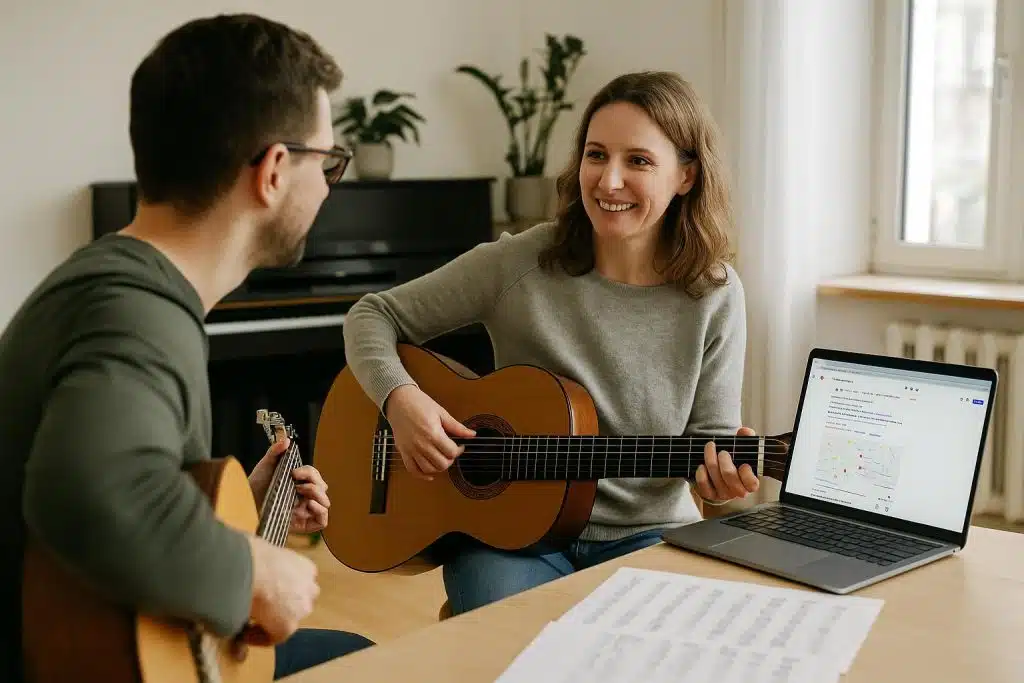
How to Teach Music - 10 Ways to Keep Your Students Inspired
Learn how to teach music and build a successful private music teaching practise. Discover the tips to succeed as a music teacher.
 Elijah Baker
My name is Elijah Baker and I am the founder of Musiprof and an independent music teacher in Montreal, Quebec, Canada. I have been teaching private music lessons for over 15 years and this article outlines the approach I’ve developed to build a successful music-teaching practice. I hope that this article will allow you to do the same.
Table of Contents
- 1: Let students choose their songs
- 2: Focus on the quickest path to playing a fun song
- 3: Make it feel easy, not hard
- 4: Build a relationship with your students
- 5: Work toward a performance
- 6: Make a video and share it with the community
- 7: Make music theory useful
- 8: Supplement your lessons with music books
- 9: Offer online music lessons
- 10: Make Learning Fun with Games
1: Let students choose their songs
When a student is working on a song that they love, they are much more motivated. Outside of their lesson, they will naturally gravitate toward practising, because they are working on music that inspires them. If their music lesson feels like a chore, they will slowly lose interest and quit. Understandably, when a student is a beginner, they may not have the required skills to learn a song that they like, however, it’s often still possible to simplify a song or to teach them a section of it, which is at their level.
Pro tip on how to teach music: When working with a new student, ask them to create a list of 5 songs that they like, then select one that they can realistically learn within a short period. If your student doesn’t feel comfortable sharing what they like, or they are not sure, then pick a popular song that other students have enjoyed learning. Once they feel more comfortable, they will most likely start suggesting songs that they’d like to learn.
2: Focus on the quickest path to playing a fun song
Often teachers get caught up in the notion that before students can learn a song, they must learn all sorts of concepts like music theory, scales, rudiments, arpeggios, reading music, and more. These things are of course important, however, for students to be motivated to learn them, they need to understand why they are important. Only then will they be willing to make the required time investment.
I believe that students’ motivation will only come after they have experienced the joys of playing music that they love. Therefore, your job as a music teacher is to help your students discover that passion by providing the shortest path to playing a song they like.
3: Make it feel easy, not hard
Often people think that playing music is hard. When we watch a masterful musician perform, we might think: wow that looks hard.
The truth is that the path to making progress in music is by learning one small thing at a time. Learning that one small thing that is just within grasp is not hard. If a student jumps into learning something too advanced, of course, it will feel hard. However, learning a piece that is just slightly above your level is not. It just takes the desire to sit down and play it day after day. When students are learning music they like and within their abilities, it doesn’t feel hard, it feels inspiring.
Pro tip on how to teach music: Your job as a music teacher is to find that perfect song for your student, which strikes the right balance between accessible and inspirational.
4: Build a relationship with your students
I’ve noticed that the students who stick around the longest are the ones that I’ve built a friendship or a good relationship with. I’ve heard from several students that their relationship with me and their enjoyment of our time together is part of the reason they continue. As a music teacher, getting to know my students is one of the best parts of the job. I get to meet all sorts of interesting people from all walks of life.
Pro tip on how to teach music: Ask your students genuine questions about themselves that are unrelated to their music lesson. Ask them how their week has been and what kind of work they do. I often spend the first 5 minutes of the lesson chatting, before starting the lesson of the week.
5: Work toward a performance

Having a recital or a performance of some kind is a great motivator. Without a performance on the horizon, it’s easy for students to put their music practice on the back burner. When a recital is approaching, students want to do well, so they put in that extra level of practice to perfect their song. Of course, many students will not be willing to perform in front of an audience. This is fine, however, it is still a good idea to encourage them and provide opportunities to do so.
Pro tip on how to teach music: Most music schools organize holiday and summer recitals. Aim to participate, or consider creating your own by pairing up with another music teacher. This way, you can split the workload and increase the audience size by combining your students. At Musiprof, I organize two recitals a year, and the participation and enthusiasm have been great every time. It’s also a great opportunity to socialize and network with our community of teachers.
6: Make a video and share it with the community
Students are often highly motivated when they can share their musical progress with friends and family. One way to encourage this is by creating a video of a song that they’ve mastered. Suggest to your students that you will use the next lesson to make a video of them performing. They can then share it on social media, YouTube or even just send it to friends and family. This helps your students feel that their music practice is valued by their community. Additionally, a video serves as a milestone for progress.
Pro tip on how to teach music: Aim to make a video for your students. See an example of a video I produced for one of my drum students:
7: Make music theory useful
I believe that music theory should be taught in a useful and practical way. Meaning, it should be taught in a way that students readily understand its usefulness. For example, when I teach guitar, I introduce music theory to help students understand how to change the key of a song because it’s so useful for every guitarist. While learning about the concept of keys in music, they begin to understand scales and how chords are built.
Pro tip on how to teach music: Try to make each theory concept practical and relate to the music they are learning.
8: Supplement your lessons with music books
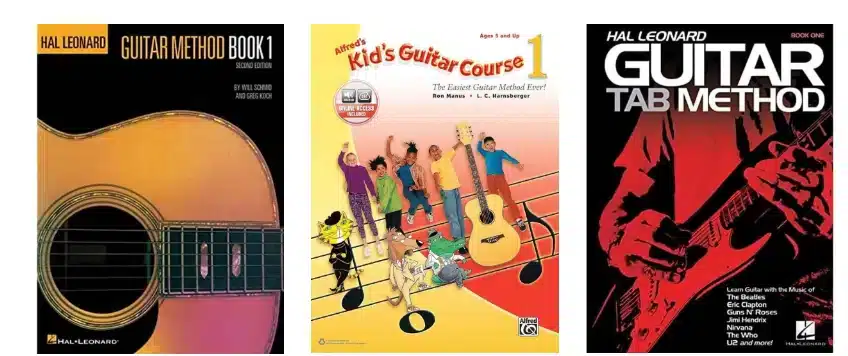
Music books can provide structure to your lessons, and allow students to learn their fundamentals (like how to read music, music theory, rudiments and more). I don’t recommend basing your entire class on music books because then your lessons will become generic and won’t be tailored to your student’s interests. That being said, I’ve used many great music books in my lessons, which have been invaluable. Here is a list of articles suggesting great music books for piano or guitar:
9: Offer online music lessons
Offering music lessons online enables teachers to reach students far beyond their local area. The surge in videoconferencing technology during the pandemic has opened the door for music instruction to thrive in virtual spaces, making remote teaching more accessible than ever. Online music lessons eliminate the need for students to commute, giving them access to a broader selection of teachers and pricing options. For teachers, this approach opens up opportunities to reach a global audience.
Focus on a specialized skill to attract students far and wide
Teachers with specialized skills can market themselves to niche groups of students worldwide who are seeking their expertise. For instance, I specialize in the Moeller Technique (advanced drum technique) and share content about it online. This has allowed me to connect with students as far away as Germany—a possibility I never imagined before online teaching became part of my reality.
Get the right gear for online music lessons
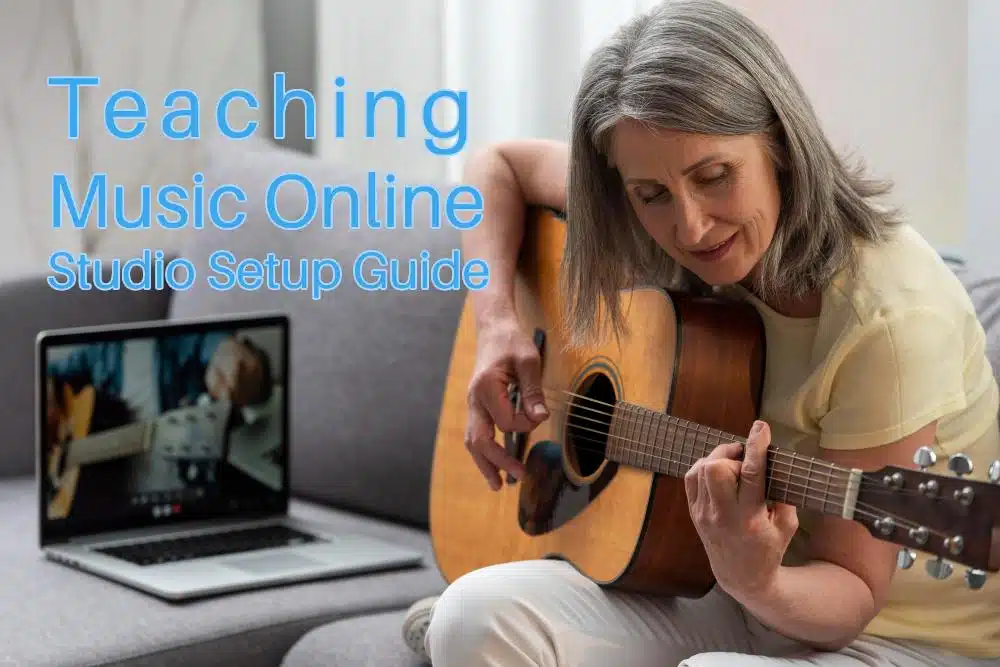
It is important to be properly set up for teaching music online. You’ll need to have the right videoconferencing software, web camera and lighting. Learn how to set up your studio for teaching music online.
Teaching music to children is about nurturing their love for music while making the learning process enjoyable. By incorporating games, building strong teacher-student relationships, and allowing kids to explore their own preferences, you can set them on a path to lifelong musical enjoyment. Read our full article on how to teach music to kids.
10: Make Learning Fun with Games
Incorporate playful activities is one of the best approaches on how to teach music to kids. For example, a piano note identification game using toy animals and dice turns practice into an exciting competition. Such activities balance fun with learning, making lessons enjoyable rather than a chore.
Foster Meaningful Teacher Connections
A good music teacher inspires a love for music through patience, empathy, and encouragement. Teachers who create a supportive environment help children see music as a joy rather than an obligation, fostering intrinsic motivation that keeps them engaged for years to come.
Let Kids Explore Their Path
Allowing children to choose their instruments and set practice schedules empowers them to take ownership of their musical journey. With guidance from teachers and parents, this approach balances discipline with enjoyment, helping children develop a natural connection to music.
How to Become a Music Teacher?
I started teaching music after I graduated with my degree in music at Concordia University in Montreal. I then got hired to teach private drum lessons at a local music school, where I gave private drum lessons to kids and teenagers. I enjoyed the work and my students enjoyed their lessons. Over the years, I continued to provide lessons at various schools around town, until I started my own teaching business Musiprof.
Gain experience:
Begin by offering music lessons to gain as much experience as possible. You can provide structured music lessons to family and friends at a low rate or for free. After getting some experience, you will build confidence and also determine if teaching is for you. If you enjoy it, and your students do too, then you may possess “the gift to teach.” With more experience, your teaching skills will improve, and you will have better and better results with your students.
Get a music degree
Having a music degree or certification at a recognized university or college builds trust with your students. It also provides you with the proper expertise. When your students know that you’ve graduated from an official music program, they will trust your opinion and feel assured that you’re providing them with high-quality information. Beyond that, many private music schools or institutions require one, so if you plan on teaching through one, it will be important to receive your diploma.
Find a Music Teaching Job
Now that you know how to teach music, you are ready to find a music teaching job and begin applying the concepts in this article. If you are interested in applying to teach through Musiprof, please send us your CV by visiting our Become a music teacher page.
Conclusion: How to teach music
I hope you found this article on how to teach music useful. Don’t hesitate to contact us more information or any questions.
About the author:

Elijah is a university-educated drummer with extensive experience for both teaching and musical performance. Since completing his Bachelor of Music at Concordia University in 2010, he has played music across each province in Canada and in more than 20 countries around the world. He is also the founder of Musiprof, a platform that connects music teachers with students across Canada.
Published on Musiprof